Daily Routine
Start of the Day
Children are welcomed into school from 9:00 am every day. They will begin their day in the dining room with their class teams before moving to their classrooms to enjoy a healthy breakfast and engage in fine motor skills activities that support their development and readiness for learning.
Registration
Registration takes place between 9:00 am and 9:35 am.
Break Time
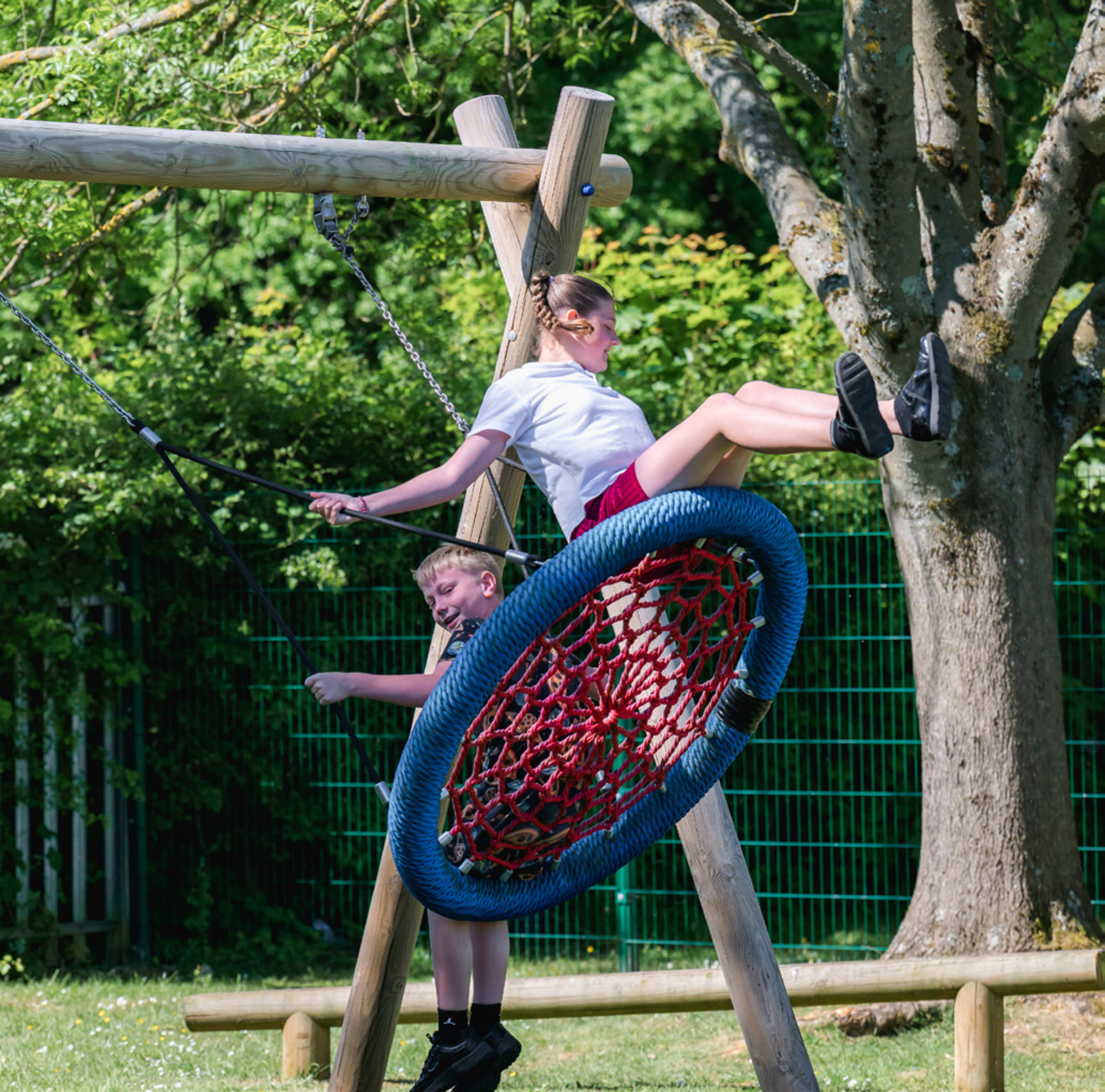
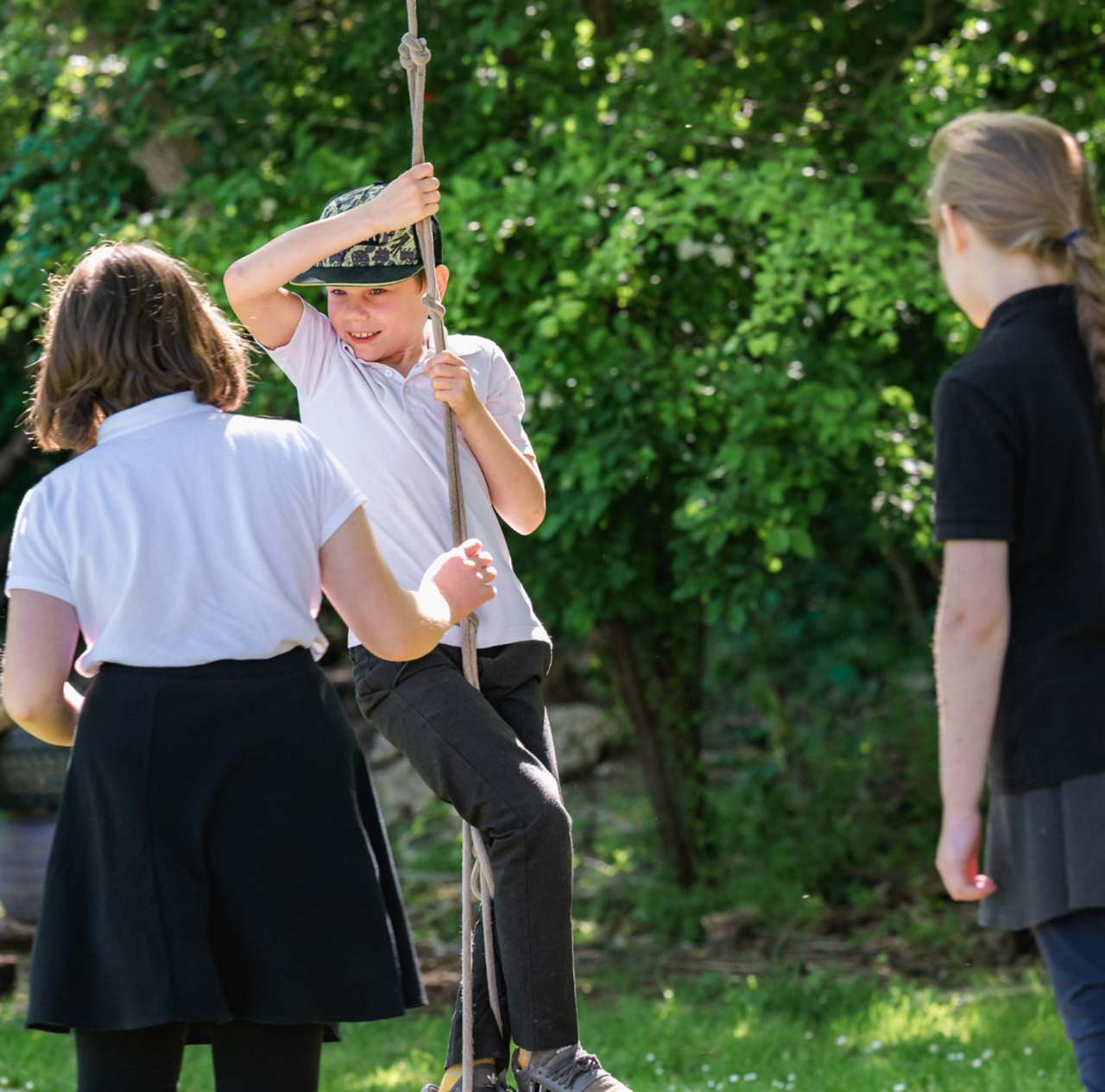
Children will have regular movement breaks throughout the day to help them stay active and focused. At 10:00 am we have an outside play for 15 minutes.
Lunch Time
Lunch is served from 12:00 pm until 1:00 pm, allowing children plenty of time to eat and socialize.
End of the Day
From Monday to Thursday, the school day ends at 3:20 pm. On Fridays, children will be dismissed earlier at 2:20 pm. The day finishes with a calming story time in the classroom before dismissal from the hall. Please ensure timely collection or inform the school if there are any changes to pick-up arrangements.
Key Information
Lunches and Water Bottles
We ask for children each day to bring in to school a water bottle of their own with fresh water inside, children have access to their bottles throughout the day and they will be sent home at the end of the day to be cleaned.
Each week, we will ask children to select what they would like for their lunch. Lunch choices can be accessed on the school page on Class Dojo.
P.E.
PE Days are Mondays and Thursdays.
PE Kits should contain – White T-shirt, Navy Blue Shorts/trackie bottoms and pumps or trainers – trainers being preferable for outdoor PE.
Swimming
As part of the PE curriculum, all classes will attend swimming lessons at Stevenage Swimming Centre for one term.
You will be informed when your child’s class will be swimming.
Continuous Provision
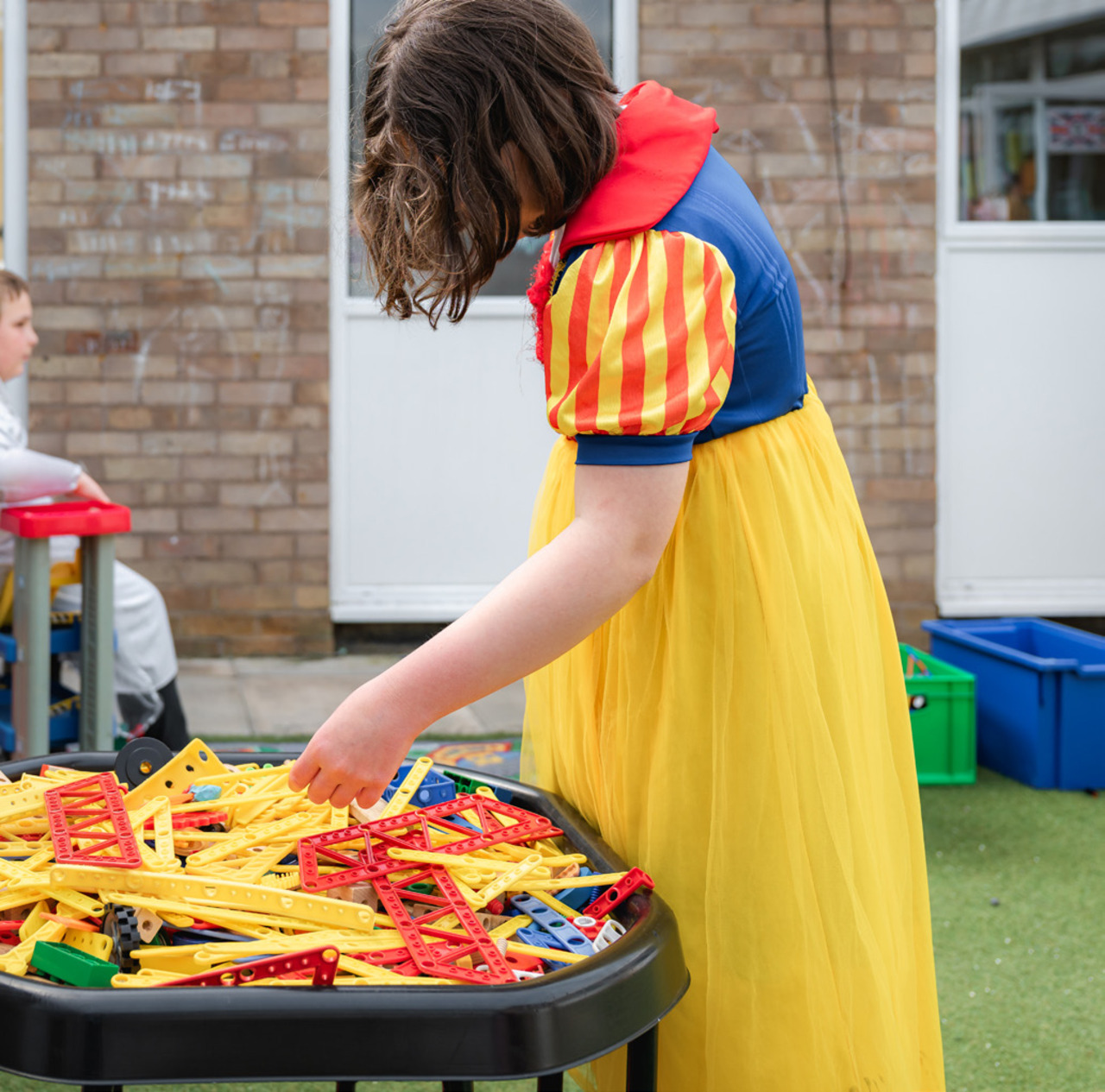
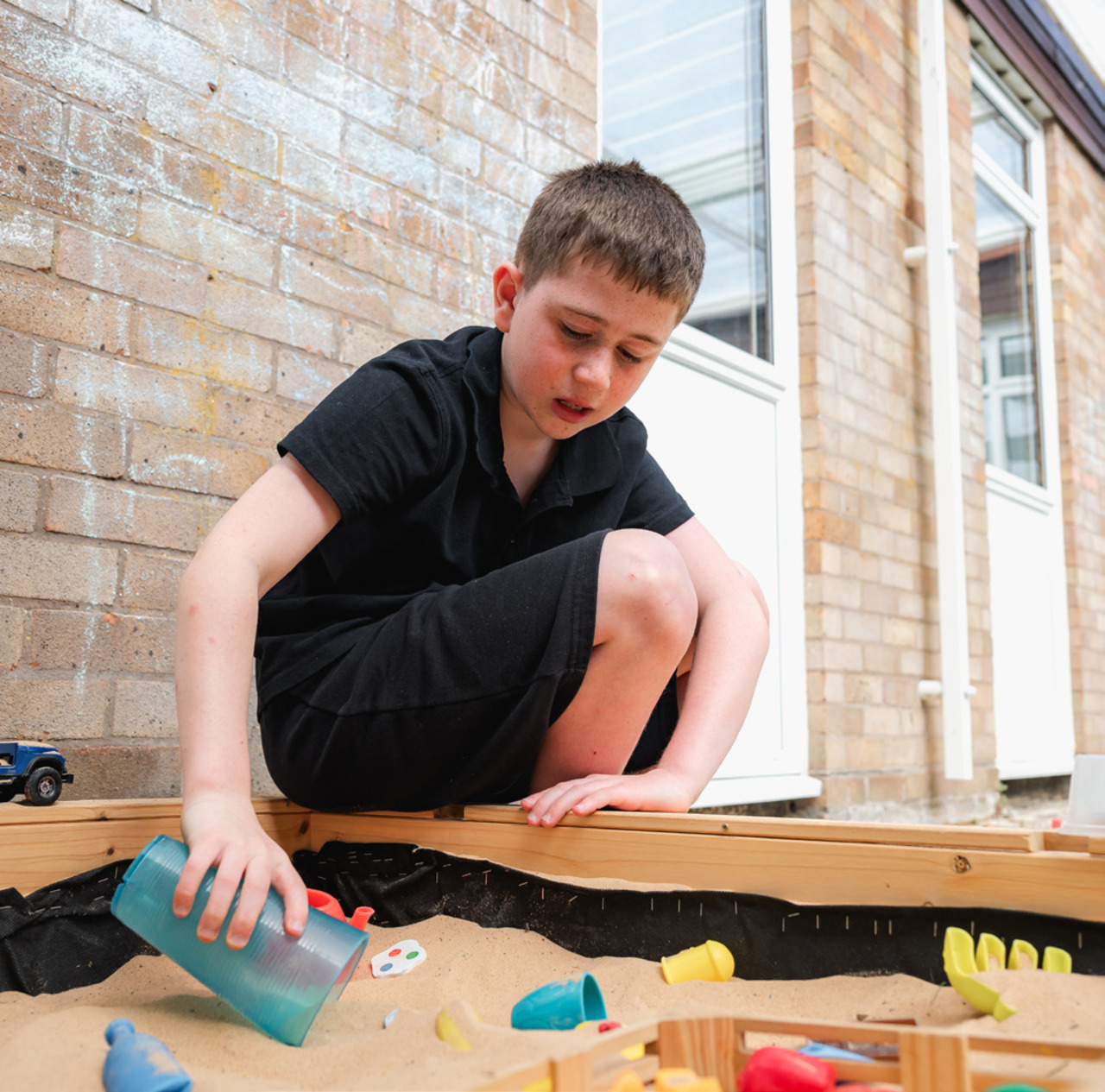
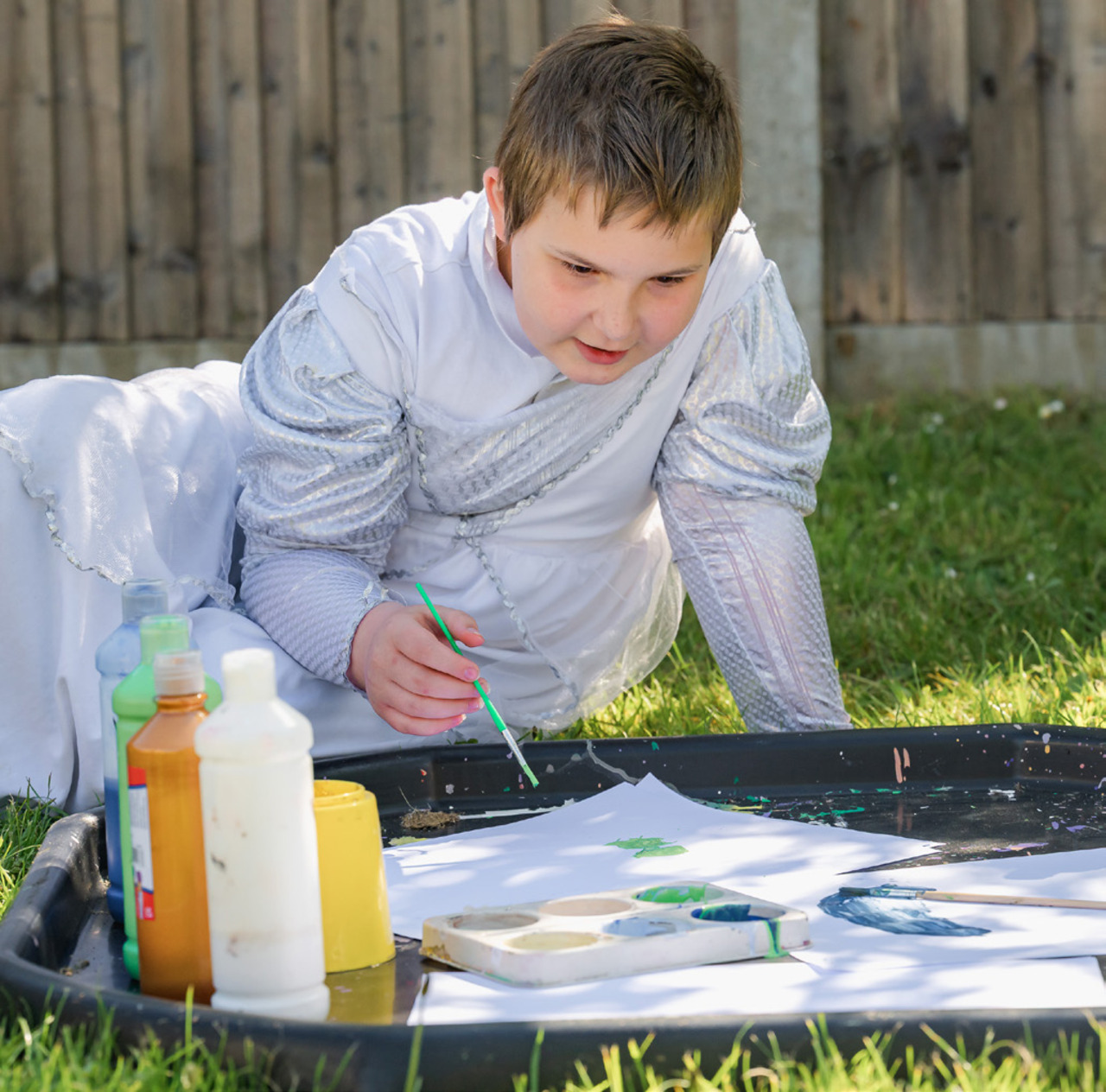
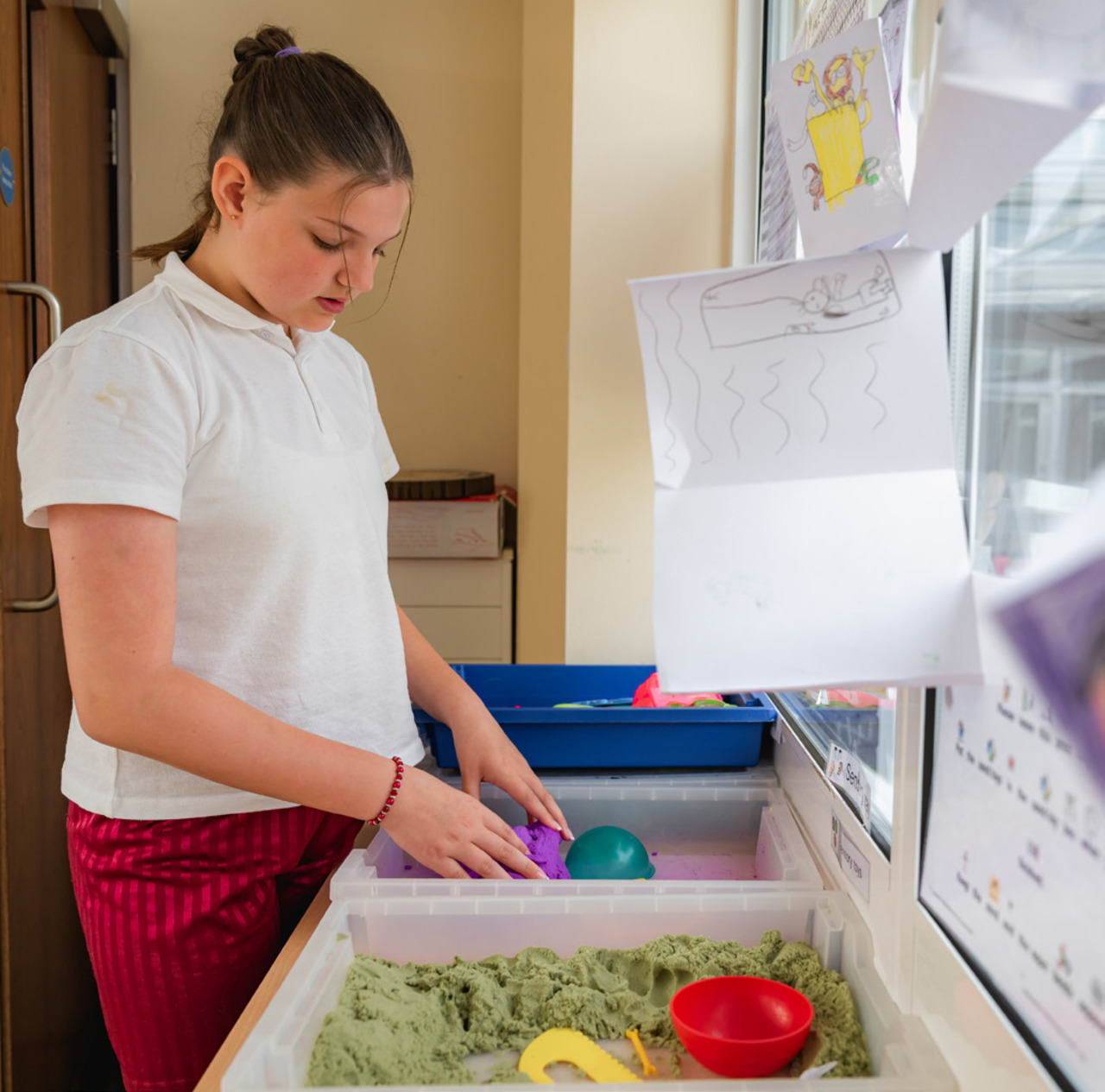
Children will access continuous provision throughout the day, allowing them to deepen their understanding of topics through play-based learning. Our carefully planned environment supports exploration, independence, and creativity, while enabling children to revisit and consolidate skills taught in adult-led sessions. This approach ensures that learning is meaningful, engaging, and matched to each child’s developmental stage.
Phonics
Children will take part in daily 30-minute phonics sessions, grouped according to the phase they are working in. This targeted approach ensures each child receives appropriate support and challenge to develop their early reading and writing skills.
Reading at home
Children will be sent home with reading books to support their phonics and early reading development. While reading at home is optional, we strongly encourage you to read with your child regularly. Children will earn house points as a reward for sharing their reading at home.
Class Reading Areas
Children will have access to a well-stocked class reading area, featuring a variety of books to spark interest and promote a love of reading. The selection is refreshed each half term to link with current topics and maintain high levels of engagement.
Talk for Writing
Talk for Writing is a fun, engaging approach to developing children’s writing skills that was created by author Pie Corbett. Here’s what parents should know:
What is Talk for Writing?
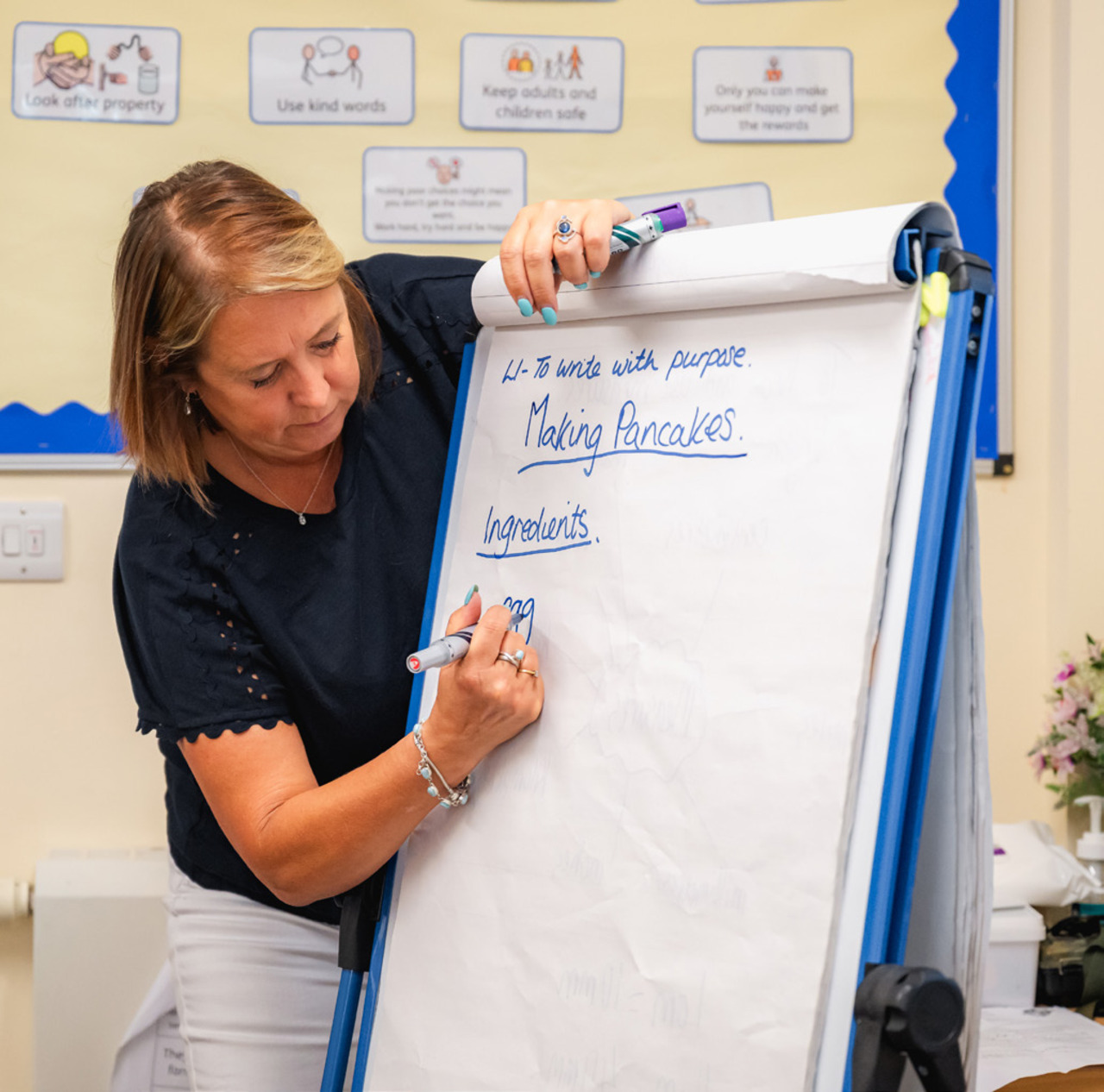
It’s a method that helps children become better writers by first getting comfortable with stories and text types through speaking and acting them out before writing them down.
How does it work?
The approach follows three main stages:
- Imitation – Children learn stories and non-fiction texts by heart using actions, story maps, and repeated telling. This helps them internalize language patterns and vocabulary.
- Innovation – Children adapt the original text, changing elements while keeping the basic structure. For example, they might change characters or settings in a story.
- Independent Application – Children use what they’ve learned to create their own original pieces of writing.
Benefits for your child:
- Builds confidence through oral storytelling before writing.
- Develops vocabulary and language patterns naturally.
- Makes writing more enjoyable through physical actions and speaking.
- Creates a toolkit of writing techniques they can use independently.
- Improves memory and speaking skills alongside writing.
Talk for Writing makes the writing process more accessible and enjoyable, helping children become confident, creative writers who understand how different types of texts work.
Subject Areas
English
In literacy, we aim to inspire children to love writing and to explore their creativity and imagination through a variety of texts and writing formats. This term, our English learning will be based on the book The Gruffalo, and the children will be creating their own stories inspired by the text. Children will be grouped across the classrooms and challenged according to their ability, ensuring each learner is supported and stretched. They will also have opportunities to extend their knowledge and practise key skills through continuous provision activities linked to our learning.
In Autumn 2, we will then focus on We’re Going on a Bear Hunt by Michael Rosen, continuing to develop storytelling skills, sequencing, and descriptive writing through this engaging and rhythmic text.
Maths
Our focus in the Autumn term will be on developing a strong understanding of place value. We will use a cross-class approach to ensure that teaching is carefully matched to each child’s stage of learning, allowing us to meet the needs of all learners. This approach supports children in building secure foundations in their mathematical knowledge and confidence. Continuous provision will play a key role, with a range of engaging, play-based maths activities available throughout the day to reinforce learning in a meaningful and hands-on way.
Science
We LOVE science in Mrs Boon and Mrs Lewis’s class! Our science lessons are designed to be practical, engaging, and hands-on to spark curiosity and inspire a lifelong love of learning in the future innovators, entrepreneurs, and scientists among us. We encourage children to explore, investigate, and ask questions as they develop their scientific thinking and understanding of the world around them. This Autumn, our science focus will be on Earth and Space and then Materials. Children will have the opportunity to take part in exciting experiments, investigations, and real-life observations, helping them to build key knowledge and scientific skills through active, play-based learning.
Knowledge of the World
As part of our Knowledge of the World learning, we believe it is important for children to understand and respect different faiths and beliefs. This term, our themes will be ‘Thanking God for Nature’ and ‘Christmas – Lights’. Through stories, discussions, and creative activities, children will begin to explore the world’s diversity and develop an appreciation for different ways people celebrate and give thanks. These sessions will take place during the first week of each half term, providing a thoughtful and engaging start to our learning.
Computing
It’s a digital world! Throughout the Autumn term, we will be focusing on online safety and creative computing as part of our computing curriculum. Using Purple Mash, children will begin to develop their digital skills in a fun and engaging way, learning how to use technology safely, respectfully, and creatively. They will explore simple tools to create, present, and share their ideas while also building confidence in navigating the online world responsibly.
Art and Design Technology
In Art and Design Technology, we will be exploring Nature Sculptures. The children will learn about a variety of artists who use natural materials in their work and will have the opportunity to explore different textures, shapes, and media through hands-on activities. Through this creative process, they will develop key skills such as cutting, joining, and shaping materials, leading up to designing and creating their own unique nature-inspired sculptures.
History
In History this Autumn term, we will be learning about the Gunpowder Plot. Our lessons will be interactive and engaging, helping children to understand this significant historical event through storytelling, role play, and hands-on activities. Children will have opportunities to bring history to life by exploring key characters, sequencing events, and even creating their own models linked to the topic. This immersive approach supports understanding and helps children develop a sense of the past in a fun and memorable way.
Geography
In Geography this Autumn term, our focus will be on Exploring Maps. Children will learn about different types of maps, their features, and how to use them to navigate and understand the world around them. Through a variety of hands-on activities, they will create their own maps, developing skills such as symbol use, spatial awareness, and basic compass directions. This topic encourages observation, critical thinking, and an appreciation for how maps help us make sense of our environment.
Book recommendations
General book recommendations
- “The Gruffalo” by Julia Donaldson — classic story with rich language and engaging narrative
- “Superworm” by Julia Donaldson — great for rhyming and insect themes
- “We’re Going on a Bear Hunt” by Michael Rosen — interactive, rhythmic storytelling
- “Owl Babies” by Martin Waddell — comforting story with natural world themes
- “Room on the Broom” by Julia Donaldson — fun rhyming story, good for sequencing and imagination
Science (Earth & Space, Materials)
- “How to Catch a Star” by Oliver Jeffers — for stars and space curiosity
- “The Darkest Dark” by Chris Hadfield — astronaut story inspiring space interest
- “Why Do Leaves Change Colour?” by Betsy Maestro — links to nature/materials and seasons
- “Material World” by Mari Schuh — introduces different materials in everyday life
History (Gunpowder Plot)
- “The Gunpowder Plot” by Nick Hunter — simple retelling suitable for young learners
- “Remember, Remember: The Story of the Gunpowder Plot” by Deborah Hopkinson — picture book version
Geography (Maps)
- “Me on the Map” by Joan Sweeney — introduction to maps and places
- “Mapping Penny’s World” by Loreen Leedy — creative story about drawing maps
- “Where the Wild Things Are” by Maurice Sendak — imaginative exploration and place
R.E. / Knowledge of the World (Christianity and Festivals)
- “Thank You, God, for Nature” by Tracey McDonnell — links to ‘Thanking God for Nature’ theme
- “Christmas Stories” by Jane Ray — gentle retelling of the Christmas story
Computing and Online Safety
- “Once Upon a Time… Online” by various authors — stories about staying safe on the internet (age-appropriate)
- “Digiduck’s Big Decision” by Ministry of Fun — online safety story for young children
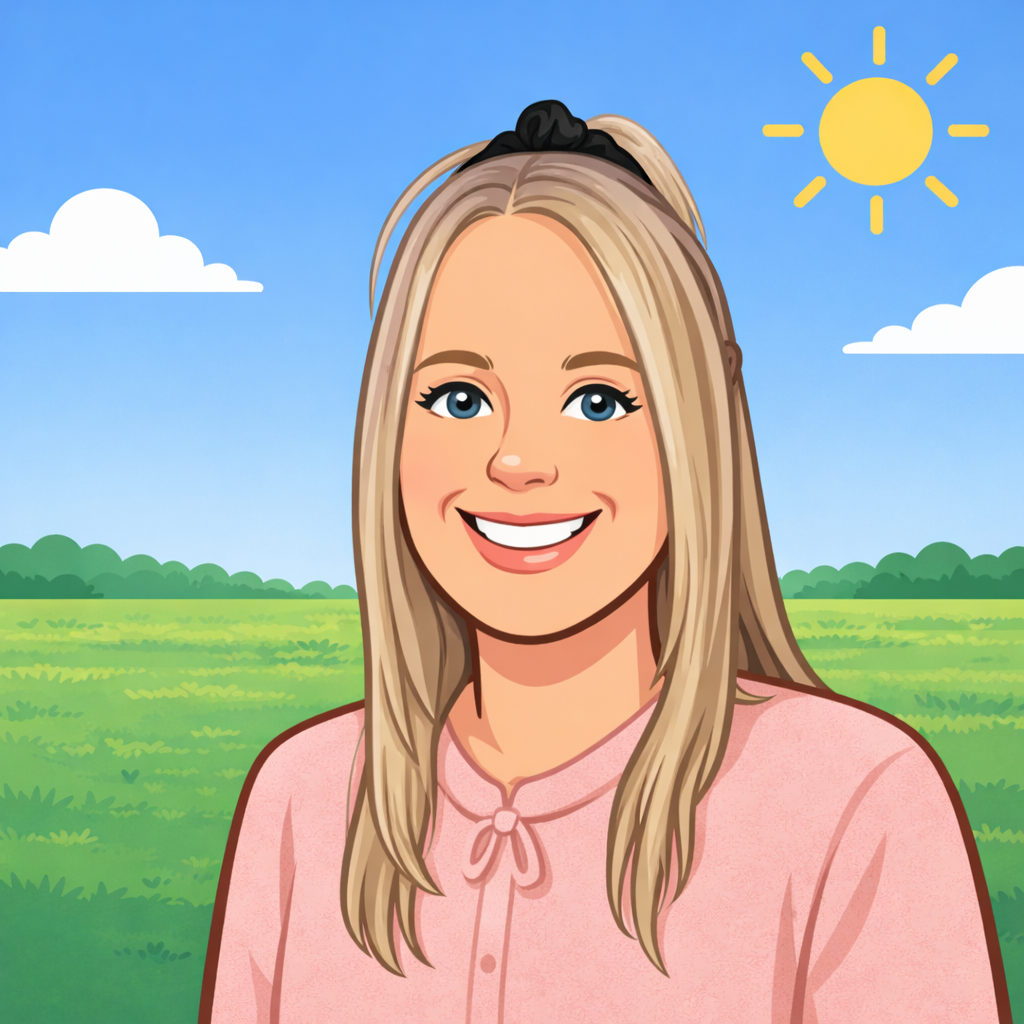
Mrs Lewis
Teacher
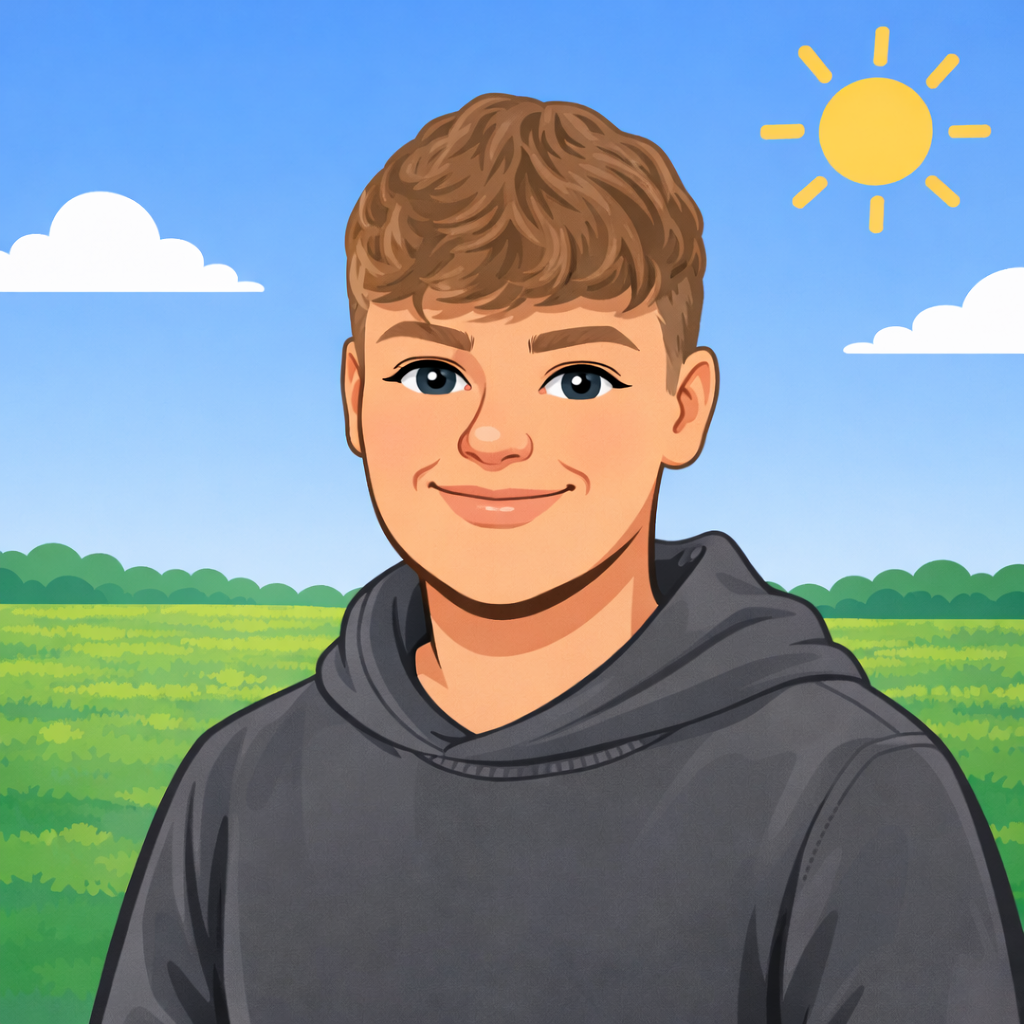
Mr Swaine
Learning and Support Assistant

Mr C Towner
Space Hub Learning & Support Assistant