Intent
At Larwood School, we aim to deliver a high-quality computing curriculum that gives children the digital skills they’ll need for the future. We want them to feel confident using technology and to take an active role in our fast-changing digital world.
Computing connects to many subjects, especially maths, science, and design & technology. We make these links clear and encourage the kind of thinking that supports learning across the curriculum. This also helps children understand both natural and man-made systems.
In computer science, children learn computational thinking. They explore ideas like logic, algorithms, and data, which help them analyse problems and create their own computer programmes to solve them.
In the information technology strand, children get hands-on with a wide range of apps, software, and devices. They learn how technology works and gain the experience needed to choose the best tools for a task. They also learn to use new or unfamiliar technologies with confidence
We also teach children to use technology safely, kindly, and responsibly. They learn how their actions online can affect others and how to make smart, respectful choices.
By the time they leave us, every child will know what to do – and who to speak to – if they come across anything online that’s upsetting or inappropriate. They’ll also have explored key legal and ethical issues around using technology in today’s world.
Implementation
We use iCompute to teach computing across the school. Lessons are creative, engaging and meet the National Curriculum for Key Stages 1 and 2. Our curriculum follows the Chris Quigley Essentials Framework, building skills and knowledge step by step. Lessons are age- appropriate and adapted to support each child’s needs.
Computer science is taught in focused sessions and often links to other subjects like literacy through instruction writing. Children learn how to give clear, accurate instructions using algorithms. They write and debug simple programs using tools like Scratch, learning to predict outcomes, fix errors and improve their work. By the time they leave, they’ll have created their own simple video game and worked with real or virtual systems.
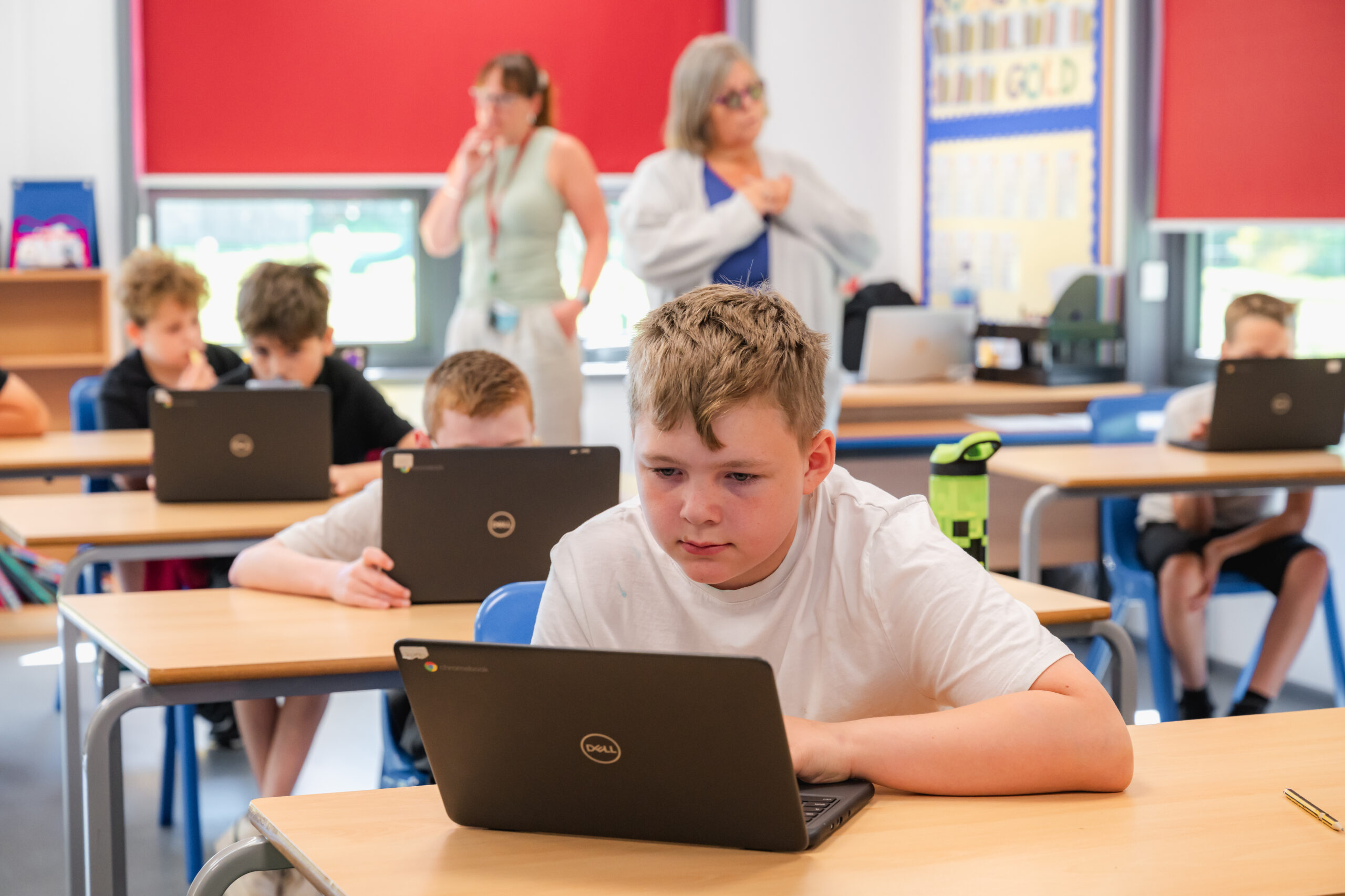
Information technology is used across subjects. Children use Chromebooks to work with a range of apps and software – creating, editing and managing digital content. They explore text, images, videos, spreadsheets, music, audio and animation, and combine these into mixed media projects for print or online. They also learn safe online communication, including how to use email responsibly
In Year 5, they explore how IT is used in business by creating adverts using different media. Digital literacy, including online safety, is taught throughout the curriculum and highlighted during whole-school e-safety days. Children’s work is displayed, and discussions continue through PSHE lessons.
Our Assistant Head leads computing across the school, ensuring clear progression and supporting staff with planning, resources and training. They also observe lessons and check work to ensure children are making strong progress.
Impact
At Larwood School, we aim to give children a high-quality computing education that helps them become confident, capable, and responsible users of technology. We want them to be ready for a world that’s always changing
We measure success by how well children progress and whether they meet the expected standards for their year group
This is checked in a few ways:
- Looking at their work, including images and videos of what they’ve done
- Talking to pupils about their learning and listening to how confidently they use the right vocabulary
- Marking their work using clear criteria
- Comparing work across and within year groups to keep standards consistent
- Producing an annual report on computing across the school
- This approach helps us make sure children enjoy computing and achieve their best.