Intent
Our agreed essential areas that we want our pupils to develop are LITERACY, MATHS AND SOCIAL SKILLS. We know that the majority of our pupils come to us with significant gaps in these areas due to previous social and schooling issues.
More and more of our pupils have been accessing interventions which has a large role in individualising their access to the curriculum, but we wanted to be able to have even more children benefit from an intervention approach.
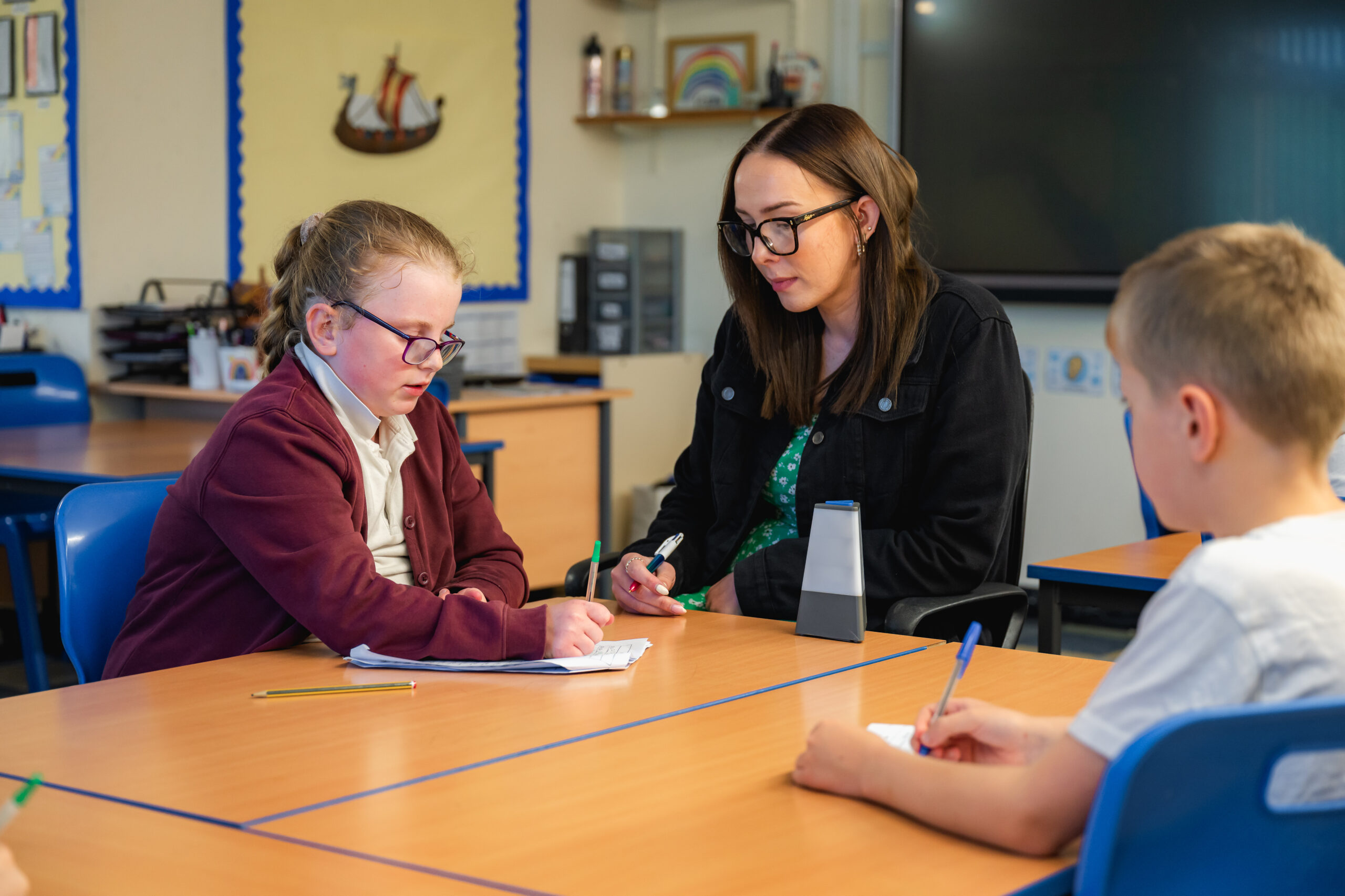
Through the implantation of essentials in the classroom, we are able to individualise learning in these areas even more so by breaking off into small groups to focus on ‘the essentials.’
By dedicating more time in the timetable to essentials (190 minutes a week) pupils should be able to fill gaps in these areas, have less time between lessons to begin to understand concepts and get those light bulb moments more frequently. Overtime, this approach will deepen understanding across the curriculum.
Implementation
- Essentials are delivered daily from 9:20–9:40 and again from 13:00–13:30 (Monday to Wednesday).
- Each class has 3 adults during these sessions (2 class staff plus 1 additional adult).
- Children work in 3 groups, focusing on literacy, maths, or social skills.
- 2 groups are adult-led, and 1 works independently.
- The extra adult may support with movement breaks or nurture time if needed.
- Teachers plan each session and ensure children access the area most relevant to their needs.
Pre- and Post-Teaching in Math’s and Literacy
- Teachers can pre-teach concepts to individuals or groups who might struggle or need stretching before the main lesson.
- After lunch, teachers can follow up with pupils who found the lesson difficult.
- This approach helps to close learning gaps and reinforce understanding.
- It supports deeper, lasting learning by revisiting ideas before they’re forgotten or misunderstood.
Impact
- Individualised learning with more 1:1 support in maths and literacy.
- Faster, sustained progress in reading and phonics.
- Pupils gaining self-confidence in lessons and themselves.
- Improved friendship and social skills.
- Greater progress and deeper learning across maths, literacy, and other subjects.
- Pupils making progress in line with peers who have had similar support.