Intent
At Larwood School, our computing curriculum follows the Purple Mash scheme to ensure pupils develop essential digital skills for the future. We aim to build confidence in using technology and encourage pupils to become active, responsible participants in a rapidly evolving digital world.
Computing is taught as a discrete subject but also connects with other areas such as maths, science, history and geography. These links help pupils understand systems and processes, both natural and man-made. Through computer science, pupils learn computational thinking, exploring concepts like logic, algorithms, and data to analyse problems and create programs. In information technology, they gain hands-on experience with a range of software and devices, learning to select appropriate tools and adapt to new technologies confidently. Digital literacy underpins all learning, ensuring pupils use technology safely, respectfully, and responsibly. By the time they leave, pupils will know how to respond to online concerns and understand key legal and ethical issues around technology use.
Implementation
We deliver computing through the Purple Mash scheme, which provides structured, engaging lessons aligned with the National Curriculum for Key Stages 1 and 2. Lessons are adapted to meet individual needs and ensure progression in knowledge and skills.
Computer science is taught through practical activities, including programming with Purple Mash’s own coding resources. Pupils learn to write and debug programs, predict outcomes, and improve their work. By the end of their time with us, they will have created projects such as simple games and interactive programs.
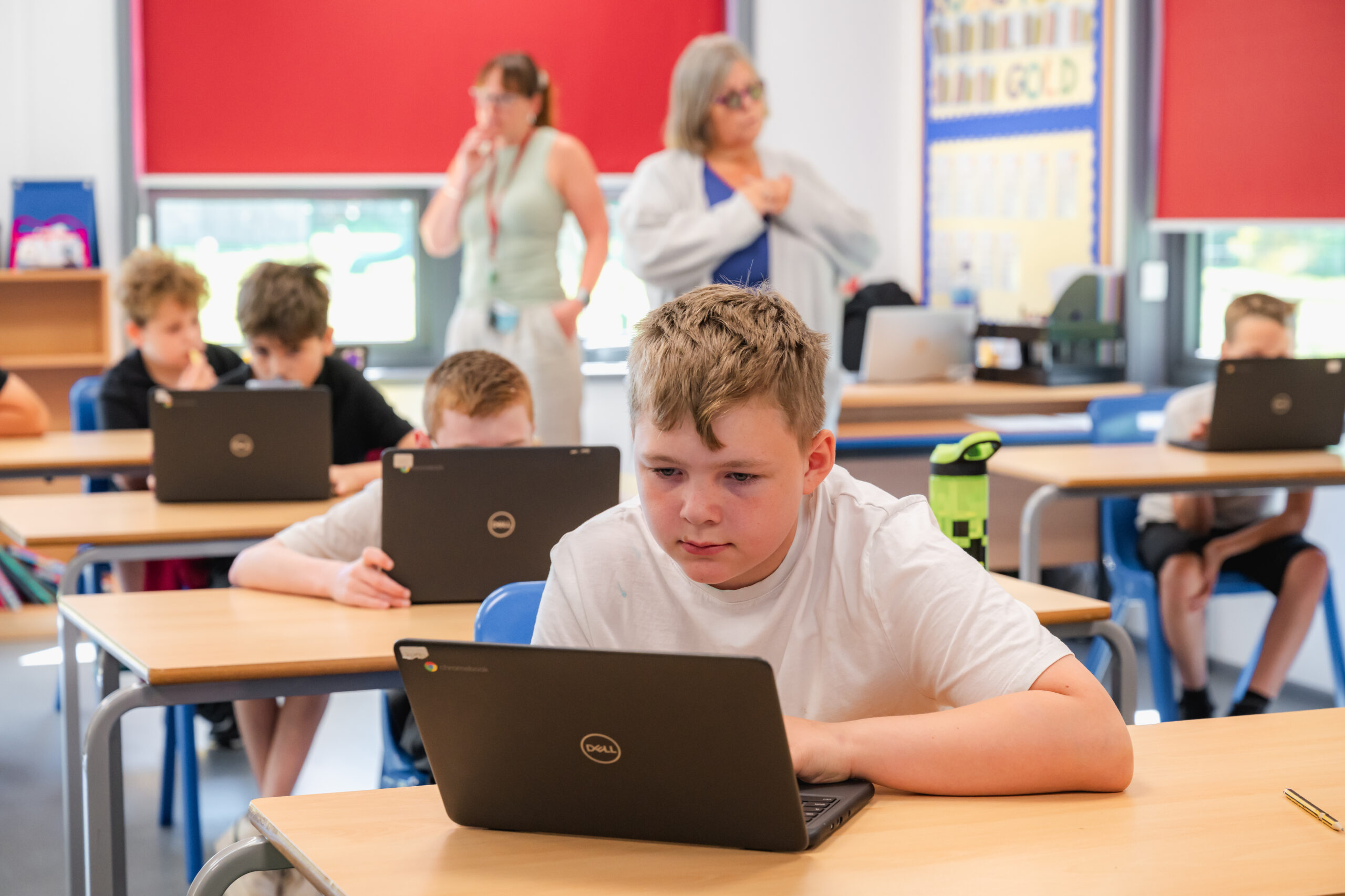
Information technology is embedded across subjects. Pupils use Chromebooks and Purple Mash applications to create, edit, and manage digital content, including text, images, audio, video, and animation. They combine these elements in multimedia projects for print and online. Online safety and responsible communication are taught throughout the curriculum and reinforced during dedicated e-safety days and PSHE lessons.

Impact
Our goal is to provide pupils with a high-quality computing education that prepares them for life in a digital society. Success is measured through:
Reviewing pupils’ work and digital projects
Talking to pupils about their learning and vocabulary use
Assessing work against clear criteria
Comparing outcomes across year groups for consistency
Producing an annual computing report
This approach ensures pupils enjoy computing, make strong progress, and leave school as confident, capable, and responsible technology users.